What Is a PR Package?
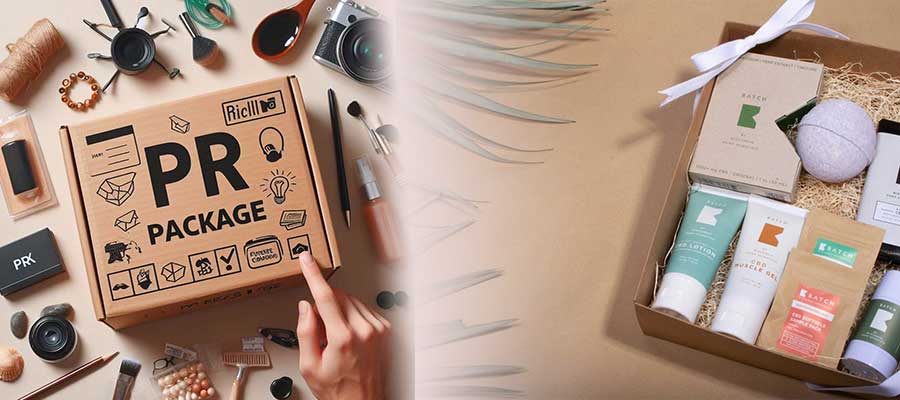
A PR package is a professionally curated gift box containing brand products, samples, and informational materials sent to media professionals, content creators, journalists, or influencers without payment or contractual posting obligations. The primary goal is earning authentic, organic media coverage through relationship-building rather than transactional advertising, making it fundamentally different from paid sponsorships or influencer marketing contracts.
A PR package is a curated box you send to journalists, influencers, or content creators—filled with your products, brand materials, and a personalized note. The goal? Earn honest reviews, unboxing videos, or social mentions organically.
Unlike paid ads or sponsored posts, there’s no contract. You’re not buying coverage—you’re building relationships.
Who gets PR packages:
- Magazine editors and beat journalists
- Instagram, TikTok, and YouTube creators
- Podcast hosts
- Industry experts or micro-influencers in your niche
The key difference: PR packages are gifts with no posting obligation. If you want guaranteed deliverables, that’s influencer marketing—a different approach with contracts and payment.
Table of Contents
Why This Strategy Works in the US
PR packages succeed in the American market because US consumers overwhelmingly trust peer recommendations and authentic influencer content over traditional brand advertising. With social commerce and content-driven discovery dominating purchase behavior, PR packages leverage existing trust networks to generate credible brand awareness, editorial coverage, and user-generated content that compounds long-term SEO and reputation value.
American shoppers trust people over brands. Research from platforms like Influencer Marketing Hub consistently shows that a significant majority of US consumers discover new products through influencer recommendations rather than traditional advertising.
Here’s why PR packages hit differently in the US market:
The content ecosystem is massive. TikTok, Instagram Reels, YouTube Shorts—creators need fresh content daily. Your product becomes their next video idea.
Unboxing culture is real. Americans love the theater of opening something beautiful. A well-designed box gets filmed, shared, and talked about.
FTC rules protect authenticity. Influencers must disclose gifted items (#gifted or #pr), so audiences know the review is voluntary, not paid. That builds trust.
Editorial credibility still matters. A mention in publications like Allure, Forbes, or Refinery29 drives not just traffic—it boosts your SEO and legitimizes your brand instantly.
In strong campaigns I’ve observed, PR packages can generate several times their cost in earned media value, website traffic, and sales—especially when targeting is precise and the story is clear.
Step 1: Know What You Want to Achieve
Defining your PR campaign goal means establishing one specific, measurable objective before investing in packaging, products, or shipping. Clear goals—whether product launch awareness, seasonal promotion, market expansion, or reputation repair—directly inform recipient selection, messaging strategy, timing, and success metrics, ensuring your campaign delivers focused results rather than scattered, unmeasurable impressions.
Before you order custom boxes or print cards, get clear on your “why.”
Most brands send PR packages for one of these reasons:
| Goal | What It Looks Like |
|---|---|
| Product launch | “We’re dropping a new serum—give beauty editors 3 weeks to test it before launch day.” |
| Brand awareness | “Nobody knows us yet. Let’s get our name in front of 50 TikTok beauty creators.” |
| Seasonal push | “Valentine’s Day is in 6 weeks. Send gift sets to lifestyle influencers now.” |
| Rebranding | “We changed our packaging and mission. Show key media the new us.” |
| Market expansion | “We’re NYC-based but want to break into LA. Target West Coast influencers.” |
| Damage control | “We had a recall. Rebuild trust by gifting improved products to past supporters.” |
Pick ONE clear goal per campaign. If your goal is fuzzy, your results will be too.
From campaigns I’ve worked on: The most effective PR packages focus on a single hero product with one clear message. “Try our new vitamin C serum—it fades dark spots in 2 weeks.” Not “Here’s our whole skincare line, pick your favorite.”
Step 2: Find the Right People (Not Just Big Accounts)
Identifying the right PR package recipients means creating a highly targeted list of journalists, influencers, and content creators whose audience demographics, engagement quality, content style, and brand values align precisely with your campaign goals. Strategic targeting—prioritizing relevance and authentic connection over follower count—dramatically increases posting likelihood, engagement rates, and conversion outcomes compared to mass-sending approaches.
Sending to 500 random influencers wastes money. Sending to 50 right people changes your business.
Here’s how to build a smart list:
Journalists and Editors
Journalists and editors are professional media writers who create editorial content for publications, blogs, and news outlets. Targeting them strategically based on beat coverage and publication tier generates credible backlinks, SEO authority, and long-term brand legitimacy.
Start with publications your customers actually read.
Beauty brand? Target Allure, Byrdie, Refinery29, Who What Wear.
Tech product? The Verge, TechCrunch, Wired.
Food/CPG? Bon Appétit, Eater, Well+Good.
Don’t just guess. Use:
- Muck Rack to find journalists by beat (e.g., “clean beauty editor”)
- HARO (Help a Reporter Out) to connect with writers actively seeking product sources
- Cision if you have budget for a media database
Check their recent articles. If they covered your competitor last month, they’ll care about your story.
Influencers and Creators
Influencers and content creators are individuals who build engaged audiences on social platforms through consistent, authentic content. Evaluating them by engagement rate, audience match, and content quality—rather than follower count alone—identifies partners who drive genuine brand awareness and conversions.
Follower count doesn’t mean much anymore. I’ve seen 15K-follower creators drive more sales than 500K accounts with low engagement.
What actually matters:
- Engagement rate
- Instagram: 3–8% is healthy for micro (10K–100K)
- TikTok: 5–15% (TikTok algo rewards smaller creators more)
- Audience match
- Check their comments. Are people actually asking “where did you get that?”
- Look at their Instagram Insights (if they share) or ask for a media kit
- Content style
- Do they do unboxings? Tutorials? Honest reviews?
- Avoid accounts that only post aesthetic flatlays—you want someone who talks about products
- Past PR behavior
- Do they post PR packages regularly? Good sign.
- Do they disclose properly with #gifted or #pr? Even better—means they follow FTC rules.
Tools to find creators:
- Modash, Upfluence, AspireIQ (influencer search platforms)
- Instagram/TikTok hashtag search:
#prpackage,#prunboxing,#beautyguru - Manually scroll your competitors’ tagged posts
Podcasters and YouTubers
Podcasters and YouTubers create long-form audio and video content that allows deep product storytelling, tutorials, and authentic reviews. Their audiences often have higher trust levels and purchase intent compared to quick social posts.
Great for:
- Long-form storytelling
- Deep dives and demos
- Affiliate or discount code integration
Always Ask First
Obtaining consent before sending PR packages means directly messaging recipients to confirm their interest and collect correct shipping information. This practice respects boundaries, reduces waste, improves delivery accuracy, and initiates relationship-building before the package arrives.
In recent years, consent has become increasingly important. Don’t just ship to random addresses you found online.
Send a quick DM:
“Hey [Name]! Love your honest skincare reviews. We’d love to send you our new barrier repair serum—no strings attached, no posting required. Would you be open to receiving it?”
This does three things:
- Gets you the correct shipping address
- Builds a relationship before the box arrives
- Weeds out people who aren’t interested (saving you money)
Step 3: Budget Realistically
Setting a realistic PR package budget involves calculating per-box costs including product value, custom packaging materials, printed inserts, shipping fees, and potential fulfillment labor. Accurate budgeting prevents overspending on unnecessary packaging while ensuring quality presentation, helping brands start with test campaigns of 30-50 boxes before scaling to larger initiatives based on measured results.
Here’s what PR packages typically cost in the US (based on campaigns I’ve tracked and industry benchmarks):
| Item | Cost Per Box |
|---|---|
| Products (full-size hero + 2–3 samples) | $30–$150 |
| Custom box, tissue, inserts | $5–$25 |
| Printed card, stickers, brochure | $2–$8 |
| Shipping (USPS Priority 2–3 day) | $8–$15 |
| Fulfillment labor (if outsourced) | $3–$10 |
| Total per box | $50–$200 |
Campaign examples:
- 30 boxes × $75 = $2,250
- 50 boxes × $100 = $5,000
- 100 boxes × $85 = $8,500
My recommendation: Start with 30–50 boxes. Test your targeting, packaging, and messaging. If it works, scale to 100–200. Don’t blow $15K on your first try.
Where people overspend:
- Fancy packaging nobody cares about (magnetic boxes are nice, but $20/box adds up fast)
- Too many low-value “extras” (stickers, tote bags, scrunchies)—influencers want product
- Rush shipping when early planning would’ve saved you 50%
Where to save money:
- Use Pirate Ship or ShipStation for 20–40% off USPS/UPS rates
- Order packaging in bulk (100+ units = better pricing)
- DIY assembly instead of paying $5–10/box for fulfillment
Step 4: Tell One Clear Story
Crafting your brand story means developing one focused narrative that communicates the specific problem your product solves, what makes it uniquely different from competitors, and the emotional connection you want recipients to feel. A clear, memorable story—articulated consistently across your note, info card, and follow-up—transforms random gifting into purposeful brand positioning.
Your PR package isn’t a mystery box. It’s a pitch—in physical form.
Every item, every card, every design choice should support one central message.
Ask yourself:
- What problem does this product solve?
- Why is it different from the 50 other products in their PR closet?
- What do I want them to feel when they open this?
- If they only remember one sentence, what should it be?
Example (clean beauty serum):
❌ Bad story: “We make clean skincare. Try our stuff!”
✅ Good story: “This is the first 100% plastic-free retinol serum that actually works—clinically proven to reduce fine lines in 14 days, packaged in biodegradable glass.”
See the difference? The second one is specific, benefit-driven, and memorable.
That story goes:
- In your handwritten note
- On your product info card
- In your follow-up email
What I’ve observed: The brands that get the most coverage aren’t necessarily the “best” products—they’re the ones with the clearest, most repeatable story.
Step 5: Choose What Goes in the Box
Selecting PR package contents involves choosing one hero product as the focal point, adding two to four complementary supporting items that create a cohesive experience, including useful tools or accessories, and optionally adding one thoughtful lifestyle item. Strategic product curation—limiting total items to 3-7—ensures clear messaging, prevents recipient overwhelm, and increases posting likelihood.
Most successful PR packages follow this formula:
Hero Product (the star of the show)
The hero product is your main focus item—typically your newest launch or best-seller—sent in full size to demonstrate quality and value while clearly communicating what you want recipients to feature.
- Your newest launch or best-seller
- Full-size, not a sample (unless you’re luxury and samples are $30+)
- This is what you want them to talk about
Supporting Cast (2–4 items)
Supporting products are complementary items that work alongside your hero product, creating a complete routine or experience that makes practical sense when used together, increasing perceived value and content opportunities.
These should make sense together.
Examples:
- Skincare routine: Cleanser sample + serum (hero) + moisturizer sample
- Tech product: App download code (hero) + quick-start guide + branded notebook
- Snack brand: New flavor (hero) + 2 bestseller flavors for comparison
Don’t just throw random products together. Think: “Would I actually use all of this in the same day/week?”
Useful Tool (optional but smart)
A useful tool is a practical accessory that helps recipients use, apply, or enjoy your product more effectively, increasing product trial likelihood and creating additional visual elements for content creation.
Something that helps them use or enjoy the product:
- Makeup brush or beauty sponge
- Charging cable for tech
- Spoon or spatula for food/skincare
- Reusable tote bag
Lifestyle Add-On (optional, use sparingly)
Lifestyle add-ons are small branded items that align with your brand aesthetic and values, adding thoughtful touches without overshadowing the actual product. Quality matters more than quantity for these extras.
A small branded item that feels thoughtful, not wasteful:
- Candle (if it matches your vibe)
- Notebook or pen (if it’s actually nice quality)
- Scrunchie, socks, matches (only if on-brand)
Total items: 3–7 max.
More than that and your message gets diluted. They won’t know what to focus on.
US-Specific Considerations
US-specific considerations include shade inclusivity for beauty products, vegan and cruelty-free certifications that many creators prioritize, size options for apparel, and clear allergen information for food items—all reflecting American consumer values and legal requirements.
Shade inclusivity matters. If you’re sending foundation, concealer, or lip products, offer shade options. Don’t assume.
Vegan/cruelty-free is a filter. Many US creators won’t post non-vegan brands, period. Make it clear on your card.
Allergen info for food/supplements. List common allergens upfront (gluten, dairy, nuts, soy). This is important both for safety and transparency. Check FDA allergen labeling requirements for compliance.
Step 6: Make It Personal
Personalizing PR packages means tailoring each box to individual recipients by using their actual name, referencing their specific content, matching product selections to their preferences or skin tone, and including handwritten notes. Personalization significantly increases open rates, emotional connection, posting likelihood, and long-term relationship potential compared to generic mass-sent packages.
Generic PR packages get ignored. Personalized ones get posted.
Here’s how to show you actually care:
Use their name and handle
Using recipients’ real names and social handles on cards and packaging demonstrates that you’ve done research and are sending thoughtfully, not mass-mailing randomly to generic “influencers.”
Not “Dear Influencer.” Use “Hi Jessica” and reference their @handle on the box or card.
Mention something specific about their content
Referencing specific videos, posts, or content themes the recipient has created shows genuine familiarity with their work, building immediate credibility and demonstrating why your product aligns with their audience.
❌ “We love your content!”
✅ “Your video on slugging for dry skin last month was so helpful—that’s exactly who we made this for.”
Match the product to them
Product matching involves selecting shades, scents, sizes, or formulations that align with the recipient’s documented preferences, dietary restrictions, or aesthetic style based on their public content and profiles.
- Send the right shade (check their Instagram photos)
- If they’re gluten-free, send gluten-free snacks
- If they love minimalist design, send neutral colors
Handwrite the note
Handwritten notes are personal messages written by hand rather than printed, creating authentic human connection and demonstrating individual effort that significantly differentiates your package from mass-produced corporate mailings.
It takes 2 minutes. It’s worth it.
Example note:
Hi Maya,
We’ve been watching your honest skincare reviews for months—your approach to barrier repair is exactly why we created this serum. It’s fragrance-free, dermatologist-tested, and actually works for sensitive skin.
No pressure to post, but we’d love to know what you think (even if it’s just a private DM).
Warmly,
Sarah @ GlowLab
Compare that to: “Dear Influencer, we hope you enjoy our product. Tag us if you post! – Marketing Team”
Which would you respond to?
Step 7: Design Packaging That Tells Your Brand
On-brand packaging design creates a cohesive visual unboxing experience reflecting your brand identity through custom boxes, branded materials, color schemes, typography, and protective elements. Thoughtful packaging enhances perceived product value, creates Instagram-worthy moments, reinforces brand positioning, and directly influences whether recipients film and share the unboxing experience with their audiences.
Your packaging is the first impression. Make it count—but don’t overthink it.
The Outer Box
The outer shipping box is the first physical touchpoint recipients see, requiring sturdy construction to protect contents during transit while offering branding opportunities through custom printing, mailers, or sticker seals.
You need something sturdy enough to survive shipping, but it doesn’t have to be custom printed.
Budget option: Plain kraft mailer + custom sticker seal
Mid-range: Custom printed mailer from noissue or Packlane ($1–3 each in bulk)
Premium: Rigid box with your logo + ribbon ($5–10 each)
Use your brand colors and keep it clean. Minimalist > chaotic.
Inside the Box
Interior packaging includes tissue paper, protective filler materials, and thoughtful product arrangement that creates visual appeal when the box is opened while preventing damage during shipping.
Tissue paper (branded or solid color that matches your vibe)
Protective filler (crinkle paper, shredded kraft, or eco honeycomb paper—skip plastic peanuts)
Product placement (don’t just dump everything in—arrange it so the hero is on top)
Smart move: Print your tagline or a short quote inside the lid. They’ll see it when they open and film it.
The Info Card
The product info card is a printed reference sheet providing essential product details, benefits, usage instructions, pricing, and brand contact information—ensuring recipients remember key details when creating content days or weeks after receiving the package.
This is critical. Influencers get 10+ PR packages a week. If they forget what your product is, they won’t post.
Include:
- Product name + one-line benefit
- Key ingredients or features (3–5 bullets)
- How to use (if not obvious)
- Price + where to buy
- Your Instagram handle + hashtag suggestion
Keep it one page, front and back max. Make it scannable.
Brand Extras
Brand extras are small supplementary items like custom stickers, thank-you cards, or QR codes linking to digital resources that reinforce brand identity and provide additional value without overshadowing the hero product.
- Custom sticker (slap it on the box, laptop, water bottle)
- Thank-you card (handwritten or printed, your choice)
- QR code linking to your media kit or tutorial video
What to skip:
- Excessive bubble wrap (looks cheap, bad for environment)
- Random swag they won’t use (cheap sunglasses, flimsy tote bags)
- Business cards (nobody keeps those anymore—put your info on the card or box)
Suppliers that work well:
- Packlane – custom boxes, great templates
- Ecopackagingbox – Custom boxes, great templates
- noissue – eco-friendly tissue, stickers, mailers
- Lumi – premium packaging (higher cost, gorgeous quality)
- Uline – stock supplies if you’re doing DIY assembly
Step 8: Give Them Everything They Need to Cover You
Providing comprehensive press materials means including both physical product information cards and digital media kit access via QR codes or links, ensuring journalists and creators have immediate access to product details, high-resolution images, brand facts, and usage rights—making content creation effortless and accurate.
Journalists are busy. Influencers are busy. Make their job easy.
Physical Insert: Product Info Card
The physical product info card is a printed single-page reference placed directly in the PR package, listing key product benefits, usage instructions, ingredients, pricing, and where to buy—serving as an instant reference when recipients create content.
Here’s the exact template:
Front:
- Product name
- 3–5 key benefits (bullet points)
- “How to use” (2–3 sentences max)
Back:
- Full ingredient list (or link to it)
- Price + where to buy (website, Sephora, Amazon, Target, etc.)
- Brand handles: @yourbrand #YourBrandLaunch
- Contact email for questions
Digital Press Kit (Link or QR Code)
A digital press kit is an online folder or webpage containing high-resolution product images, logo files, brand information, founder bio, and usage rights accessible via QR code or short link, providing media professionals with ready-to-use assets.
Include a QR code or short link (use Bitly or Linktree) to a folder with:
- High-res product images (white background, lifestyle shots, flatlay)
- Logo files (PNG with transparent background, color + black versions)
- Brand fact sheet (who you are, mission, certifications, founder bio)
- Usage rights note
Example usage rights language:
“You’re welcome to use these images in editorial content and social posts as long as you credit @yourbrand.”
Where to host it:
- Google Drive folder (set to “anyone with link can view”)
- Dropbox
- Notion page
- Dedicated press page on your website
Tip: Name your image files clearly. Not “IMG_1234.jpg” but “GlowLab_Serum_Lifestyle_01.jpg”
This helps them and helps with image SEO if they upload to a blog.
Step 9: Set Expectations (Without Being Pushy)
Setting clear expectations means communicating that PR packages are gifts without posting obligations while suggesting optional ways recipients can share if they choose. This no-pressure approach respects FTC guidelines, builds authentic relationships, preserves goodwill, and often results in more enthusiastic, genuine coverage than demanding guaranteed posts would generate.
PR packages are gifts, not transactions. This is where many brands get it wrong.
If you want guaranteed posts with specific deliverables, you need a paid influencer partnership with a contract and compensation. That’s a different approach entirely.
How to word your “ask”:
Proper ask wording uses friendly, non-demanding language that expresses hope recipients enjoy the product while explicitly stating there’s no posting requirement, contrasted with entitled or transactional phrasing that damages relationships.
✅ Good (builds goodwill):
- “There’s no obligation to post—just hope you love it!”
- “If you do share, we’d be honored. Tag us @brand so we can see!”
- “Honest feedback is welcome, even if it’s private.”
❌ Bad (sounds entitled):
- “Please post within 7 days.”
- “We expect at least one Instagram post and 3 Stories.”
- “Tag us or we won’t send you more products.”
FTC Disclosure (This Is Law)
FTC disclosure requirements mandate that influencers clearly and conspicuously disclose material connections with brands when posting about gifted products, using hashtags like #gifted or #pr or explicit caption language to inform audiences the item was received for free.
If someone posts about your gifted product, they MUST disclose it clearly.
Required by FTC Endorsement Guides:
#giftedor#prvisible in the caption (not buried in comments)- Or: “Gifted by @brand – honest thoughts only”
- Or: “PR sample – no obligation to post”
Make it easy. Suggest disclosure language in your card:
“If you share, feel free to use: ‘Gifted by @GlowLab—honest review!’ We appreciate transparency 💛”
Why this matters:
- Protects you legally
- Protects them (FTC can issue significant fines per violation—amounts vary but can reach tens of thousands of dollars)
- Builds audience trust (people actually appreciate knowing it’s gifted—it means the review is voluntary)
Read the full guide: FTC Disclosures 101 for Social Media Influencers
Step 10: Plan US Shipping and Logistics
Planning shipping and logistics involves selecting appropriate carriers based on package weight and urgency, calculating accurate delivery timelines, managing costs through discount platforms, ensuring proper packaging for fragile items, and coordinating send dates to align with product launches or seasonal campaigns for maximum media impact and unboxing timing.
Shipping is boring but critical. Miss the timing and your whole campaign flops.
Carrier Options (US Domestic)
Domestic shipping carriers offer different speed and cost tiers for sending PR packages within the United States, with USPS Priority Mail typically providing the best value for standard boxes.
| Carrier | Speed | Cost | Best For |
|---|---|---|---|
| USPS Priority Mail | 2–3 days | $8–$15 | Most PR packages (best value) |
| USPS First Class | 3–5 days | $5–$10 | Lightweight boxes under 1 lb |
| UPS Ground | 1–5 days | $10–$25 | Heavier boxes, better tracking |
| FedEx Ground | 1–5 days | $10–$30 | When you need reliability + tracking |
| FedEx 2-Day | 2 days | $20–$40 | Last-minute or time-sensitive launches |
Discount platforms:
- Pirate Ship – Get commercial USPS rates without a business account (can save 30–50%)
- ShipStation – Multi-carrier platform with discounts
- Stamps.com – Good for high-volume shippers
Timing Your Send
Strategic send timing means scheduling PR package shipments two to three weeks before product launches or four to six weeks before seasonal events, giving recipients adequate time to test products, create content, and schedule posts.
Product launches: Ship 2–3 weeks before public launch day.
This gives them time to test, film, edit, and schedule posts for launch week.
Seasonal campaigns: Ship 4–6 weeks before the holiday.
Valentine’s PR? Send in early January. Holiday gifts? Send in October.
Avoid these weeks:
- Thanksgiving week (USPS delays)
- Christmas week (everything’s slow)
- Major industry events (SXSW, VidCon, Beautycon—they’re traveling)
Shipping Fragile or Regulated Items
Fragile and regulated item shipping requires special packaging materials like bubble mailers or molded inserts for glass, compliance with USPS hazmat rules for liquids and aerosols, and FDA-compliant labeling for food products.
Glass bottles: Use bubble mailers or molded cardboard inserts. Don’t just toss in crinkle paper.
Liquids, aerosols, nail polish: Follow USPS hazmat rules (some items can’t ship via air).
Food/supplements: Must include FDA-compliant labels with ingredients, allergens, and nutrition facts.
International customs: If shipping from outside the US, fill out customs forms honestly. If it’s genuinely a gift with no payment expected, you can mark it as “gift” rather than “commercial sample”—but always follow current postal regulations as they can vary.
Track Everything
Package tracking means using carrier tracking numbers to monitor delivery status, confirm receipt, provide proof of delivery if questioned, and maintain organized campaign records for analysis.
Always use tracking. Save the numbers. Share them with recipients if they ask.
If a box gets lost, you can file a claim. If it’s delivered but they say it’s not, you have proof.
Step 11: Follow Up (But Don’t Be Annoying)
Professional follow-up involves sending a brief, friendly email five to ten days after confirmed delivery to check package receipt, offer additional information or assets, and maintain relationships without pressuring recipients to post. Proper follow-up builds long-term media connections and increases coverage likelihood while respecting boundaries.
You shipped the boxes. Now what?
First Follow-Up (5–10 Days After Delivery)
The first follow-up is a short, low-pressure email sent after tracking confirms delivery, primarily to confirm receipt and offer help rather than demand content creation.
Wait until tracking confirms delivery, then send a short, friendly email.
Subject: “Hope the package arrived safely!”
Body:
Hi [Name],
Just checking in to make sure our [Product Name] PR package made it to you okay!
Absolutely no pressure to post—we just hope you enjoy it. If you have any questions about ingredients, usage, or need high-res images for future content, I’m here to help.
Thanks for being awesome.
Best,
[Your Name]
[Brand] | [Your Email] | [@YourInstagram]
Key elements:
- Confirms delivery (helpful for them too)
- Reiterates “no pressure”
- Offers help (this is relationship-building, not sales)
If They Don’t Respond
Non-response management means gracefully accepting when recipients don’t reply or post, limiting follow-ups to maximum twice, keeping them on future campaign lists, and focusing energy on engaged relationships.
Don’t:
- Follow up more than twice
- Ask “Why didn’t you post?”
- Complain about the cost of the box
- Threaten to “never send them PR again”
Do:
- Move on gracefully
- Keep them on your list for next campaign (they might post later, or just needed more time)
- Focus energy on people who did engage
Even in well-executed campaigns, only about 30–50% of recipients will post. That’s completely normal. The ones who do often drive outsized results.
Step 12: Track What Worked (And What Didn’t)
Measuring PR campaign performance means systematically tracking quantitative metrics like posts created, reach, engagement, website traffic, and sales alongside qualitative indicators such as sentiment and press mentions. Data analysis helps calculate earned media value, determine ROI, identify successful patterns, and optimize future campaigns for better targeting and results.
You can’t improve if you don’t measure.
Metrics to Track
Campaign metrics are measurable data points including number of posts, total reach and impressions, engagement rates, website traffic sources, conversion tracking through codes, earned media value estimates, content sentiment, and editorial backlinks.
| Metric | How to Get It |
|---|---|
| Posts created | Manual count (Instagram, TikTok, YouTube) |
| Reach + impressions | Check their post insights if public, or estimate based on follower count |
| Engagement | Likes + comments + shares + saves |
| Website traffic | Google Analytics (use UTM parameters in links) |
| Sales | Discount codes, affiliate links, or Shopify analytics |
| Earned Media Value (EMV) | A common estimation method: reach × $5–$10 CPM (though this varies by industry) |
| Sentiment | Positive, neutral, or negative tone of coverage |
| Press mentions | Google Alerts, media monitoring tools |
Free tools:
- Google Analytics (track referral traffic)
- Google Alerts (get notified when your brand is mentioned online)
- Meta Business Suite (track Instagram engagement)
- TikTok Analytics (built into the app)
Calculate ROI
PR ROI calculation compares the total value generated from coverage—including estimated earned media value, direct sales, and long-term benefits—against campaign costs to determine percentage return on investment.
Formula:
ROI = (Value of Coverage – Campaign Cost) / Campaign Cost × 100
Example:
- Campaign cost: $5,000
- Earned 30 posts
- Combined reach: 500,000
- Estimated EMV: $15,000 (using conservative industry benchmarks)
- Sales tracked via codes: $8,000
Total value: $23,000
ROI: ($23,000 – $5,000) / $5,000 × 100 = 360% ROI
Keep in mind: Not every post will convert to sales immediately. Some value is long-term (SEO from editorial links, brand awareness, UGC you can repurpose).
What to Look For
Post-campaign analysis examines which recipients drove highest engagement, which products received most positive feedback, what customer questions emerged in comments, and whether editorial coverage generated valuable SEO backlinks.
Which recipients drove the most engagement?
Target similar profiles next time.
Which products got the most love?
Double down on those in future campaigns.
What did people say?
Read the comments. If everyone’s asking “where’s the link?” or “does it work for dry skin?”—that’s valuable customer insight.
Did press coverage lead to SEO wins?
Check Google Search Console. Did you get backlinks from editorial sites? Those compound over time.
Real Campaign Examples
Real campaign examples showcase actual PR package strategies, execution details, recipient targeting, packaging choices, and measured results from beauty, tech, and food industry initiatives, providing actionable templates and realistic performance benchmarks brands can adapt to their own campaigns and budgets.
These examples are modeled on typical results I’ve observed across similar campaigns in each category. Numbers reflect what’s realistic and achievable with proper execution.
Example 1: Clean Beauty Serum Launch
Profile: Small DTC skincare brand (under $2M annual revenue)
Goal: Launch new vitamin C serum, get on buyer radars
Recipients: 50 beauty micro-influencers (15K–80K followers) + 10 editorial contacts
What they sent:
- Hero: Vitamin C Brightening Serum (full size, $48 retail value)
- Supporting: Gentle cleanser sample, SPF 50 mini
- Tool: Jade roller ($8 wholesale, highly visual)
- Extra: Branded silk headband, small candle
- Card: “Get glowing in 3 steps” + QR code to application tutorial
Packaging:
- White magnetic box with rose gold foil logo
- Blush pink tissue paper
- Custom round sticker seal
- Handwritten thank-you card
Results:
- 22 Instagram posts (Reels + grid)
- 8 TikTok unboxing/review videos
- 3 blog features (beauty publications)
- Combined reach: approximately 450,000
- Website traffic spike: +12% week of launch
- Editorial mention led to retailer inquiry
Cost: ~$6,500 total ($130/box for 50 boxes)
Estimated EMV: $18,000
ROI: 277%
What worked:
Targeting micro-influencers with genuine skincare knowledge (not just aesthetic accounts). The jade roller made great b-roll. Clean, luxury packaging matched the premium price point.
Example 2: Productivity SaaS App
Profile: AI email assistant tool
Goal: Drive free trial sign-ups before paid launch
Recipients: 40 productivity YouTubers, tech journalists, podcast hosts
What they sent:
- Hero: 1-year premium subscription code (delivered in printed card form)
- Supporting: Laminated quick-start guide, keyboard shortcut cheat sheet
- Extra: Minimalist black Moleskine-style notebook + branded pen
- Card: “Reclaim 5 hours a week—here’s how” + QR to onboarding video
Packaging:
- Sleek matte black box
- No physical product (digital-first)
- QR code printed inside lid (led to video walkthrough)
Results:
- 15 YouTube reviews/tutorials (5-min reviews to 20-min deep dives)
- 5 podcast mentions
- 1,200 new trial sign-ups via unique PR codes
- Featured in tech newsletter (unpaid)
- Significant portion of trials converted to paid subscriptions
Cost: ~$3,200 ($80/box for 40 boxes)
Value: Strong conversion to paid users created substantial long-term value
What worked:
Targeting creators who already make productivity content. The notebook wasn’t random swag—it fit perfectly with the brand positioning. QR code made onboarding seamless.
Example 3: High-Protein Snack Brand
Profile: New CPG snack company
Goal: Build awareness, get retail meetings
Recipients: 60 fitness influencers + nutrition bloggers + food editors
What they sent:
- Hero: Full-size bag of new Spicy Protein Chips (20g protein)
- Supporting: 3 other flavor samples
- Extra: Branded gym towel, portion-control snack bowl
- Card: Nutrition facts + recipe card (chip nachos, chip-crusted chicken)
Packaging:
- Eco-friendly kraft box (recyclable)
- Shredded paper filler
- Custom logo stamp (budget-friendly, rustic vibe)
Results:
- 18 Instagram Reels (unboxings + recipe videos)
- 6 blog reviews
- Category buyer at major retailer saw social coverage and reached out
- Brand gained 8,000+ Instagram followers in 2 weeks (organic)
- Led to retail placement discussions
Cost: ~$4,500 ($75/box for 60 boxes)
Value: Retail relationship alone justified the entire investment
What worked:
Recipe card gave influencers ready-made content ideas. The gym towel reinforced “this is for fitness people.” Retail buyer was already following fitness influencers—PR made the introduction happen organically.
Mistakes That Kill PR Campaigns
Common PR package mistakes include sending unsolicited boxes without consent, lacking clear hero products or messaging, overloading with worthless swag, treating gifts as transactional contracts, ignoring FTC disclosure requirements, failing to track results, sending identical non-personalized boxes, and following up too aggressively—all dramatically reducing campaign effectiveness.
Sending to people who never asked for PR.
Random addresses = boxes going to wrong people, spam complaints, wasted budget.
Fix: Always get consent via DM or email first.
No clear hero product or message.
“We sent them 8 products to choose from!” = They got confused and posted nothing.
Fix: One hero. One story. Simple.
Too much random swag, not enough actual product.
Tote bag + stickers + socks… wait, where’s the product?
Fix: Influencers want to try your product. Extras should enhance, not replace.
No product information in the box.
They forget what it is by the time they film.
Fix: Include a scannable info card. Always.
Treating PR packages like paid campaigns.
“We expect 1 post and 3 Stories by Friday.”
Fix: That’s a paid contract. PR packages are relationship-building, not transactional.
Ignoring FTC disclosure rules.
Non-disclosure puts both you and the influencer at legal risk.
Fix: Make disclosure easy. Suggest clear wording in your note.
Not tracking anything.
“We sent 100 boxes. I think some people posted?”
Fix: Use a spreadsheet. Track who you sent to, who posted, what the reach was.
Sending identical boxes to everyone.
Same shade of lipstick to 50 people with different skin tones.
Fix: Personalize where possible (shade, scent, size).
Following up too aggressively.
“You received the package 3 days ago. Why haven’t you posted yet?”
Fix: Wait 7–10 days. Keep it light. Move on gracefully if no response.
Your PR Package Checklist
A comprehensive PR package checklist covers pre-launch planning tasks like goal-setting and recipient research, fulfillment execution including assembly and shipping coordination, and post-send activities such as follow-up communication, coverage tracking, metric analysis, and campaign refinement—ensuring no critical steps are missed.
Pre-Launch
- Set one clear campaign goal
- Build recipient list (names, handles, addresses, notes)
- Set total budget
- Choose hero product + 2–4 supporting items
- Design packaging (order samples first to test)
- Write personalized notes for each recipient
- Create product info card
- Set up digital press kit (Google Drive, Notion, or website page)
- Order shipping supplies
- Schedule send dates
During Fulfillment
- Assemble boxes
- Include info card, note, and any printed materials
- Add tracking numbers to spreadsheet
- Confirm shipping addresses (DM recipients if needed)
- Ship boxes
- Send optional “on the way” email (if doing coordinated launch)
Post-Send
- Track delivery confirmations
- Send follow-up email 5–10 days after delivery
- Monitor social media for posts (set alerts for brand mentions)
- Engage with posts (like, comment, thank them genuinely)
- Track metrics (reach, engagement, traffic, sales)
- Save UGC (screenshot posts, download videos for potential reuse)
- Send thank-you DM to everyone who posted
- Analyze results and document learnings for next campaign
Frequently Asked Questions
These frequently asked questions address common concerns about PR package costs, recipient selection, posting obligations, address collection methods, legal contract requirements, optimal send timing, shipping carrier selection, and success measurement—providing clear, practical answers based on industry standards and real campaign experience.
How much does a PR package typically cost in the US?
Most brands spend $50–$200 per box. A campaign of 50 boxes typically costs $5,000–$10,000 including product, packaging, and shipping. If you’re just starting, you can test with 20–30 boxes for $2,000–$3,000.
Do I have to send only to influencers?
No. You can (and should) send to:
- Journalists and editors (drives editorial coverage and SEO)
- Podcast hosts (great for long-form storytelling)
- Industry experts (for B2B products)
- Loyal customers who already love your brand (turn them into advocates)
Can I require them to post?
No—not if it’s a PR package. That’s the fundamental difference. It’s a gift with no strings attached.
If you want guaranteed posts with specific deliverables, you need a paid influencer partnership with a contract, timeline, and compensation. The two approaches are completely different legally and ethically.
How do I get their address?
Just ask politely via DM:
“Hi! We’d love to send you our new [product]—totally no pressure to post. Would you be open to sharing your mailing address?”
Most creators who regularly accept PR have a process for this. Some even list a PR email in their bio. If they ignore you, move on. Don’t push.
When’s the best time to send PR packages?
For product launches: 2–3 weeks before your official launch date (gives them time to test and create content).
For seasonal campaigns: 4–6 weeks before the holiday (send Valentine’s content in early January, holiday content in October).
Avoid: Major shipping delay periods (Thanksgiving week, Christmas week) and weeks when your audience is traveling to industry events.
What shipping carrier should I use?
For most PR packages in the US: USPS Priority Mail (2–3 day delivery, $8–$15).
Use Pirate Ship to get discounted commercial rates without needing a business account—can save you 30–50%.
For heavier boxes or when tracking is critical: UPS Ground or FedEx Ground.
Do I need a contract for PR packages?
No. PR packages are gifts. No contract needed.
Contracts are for paid partnerships where you’re compensating someone in exchange for specific deliverables (number of posts, usage rights, exclusivity, etc.).
If you’re just gifting with no payment = no contract required.
How many people should I send to?
Quality beats quantity every time.
30–50 highly targeted recipients will outperform 500 random people consistently.
Start small. Test. Measure. Then scale based on what works.
What if they don’t post?
That’s completely normal. Even in well-executed campaigns, only 30–50% of recipients will post.
Common reasons people don’t post:
- They’re busy with other commitments
- They didn’t love the product (which is honest feedback)
- They’re saving it for later content
- It got lost in their PR pile
Don’t take it personally. Focus your energy on the wins and the relationships that are developing.
How do I measure success?
Track:
- Number of people who posted
- Total reach and impressions
- Engagement (saves and shares matter more than likes)
- Website traffic (use UTM parameters in any shared links)
- Sales from discount codes or affiliate links
- Press mentions and backlinks (use Google Alerts)
- Sentiment (were reviews positive, neutral, or negative?)
Compare total value generated to campaign cost. That’s your ROI. Remember that some value is long-term—SEO, brand awareness, and relationships compound over time.
Final Thoughts
PR packages work when they’re strategic, not random.
The most successful campaigns share these traits:
- Clear targeting (right people, not just big accounts)
- Strong story (one clear message)
- Genuine personalization (they know you actually care)
- No-pressure approach (building relationships, not demanding posts)
- Consistent measurement (so you learn and improve)
Start with 30–50 boxes. Test your approach. Learn what resonates. Refine. Then scale.
You’re not buying coverage. You’re earning trust.